

White Garlic vs Black Garlic: What's the Difference?
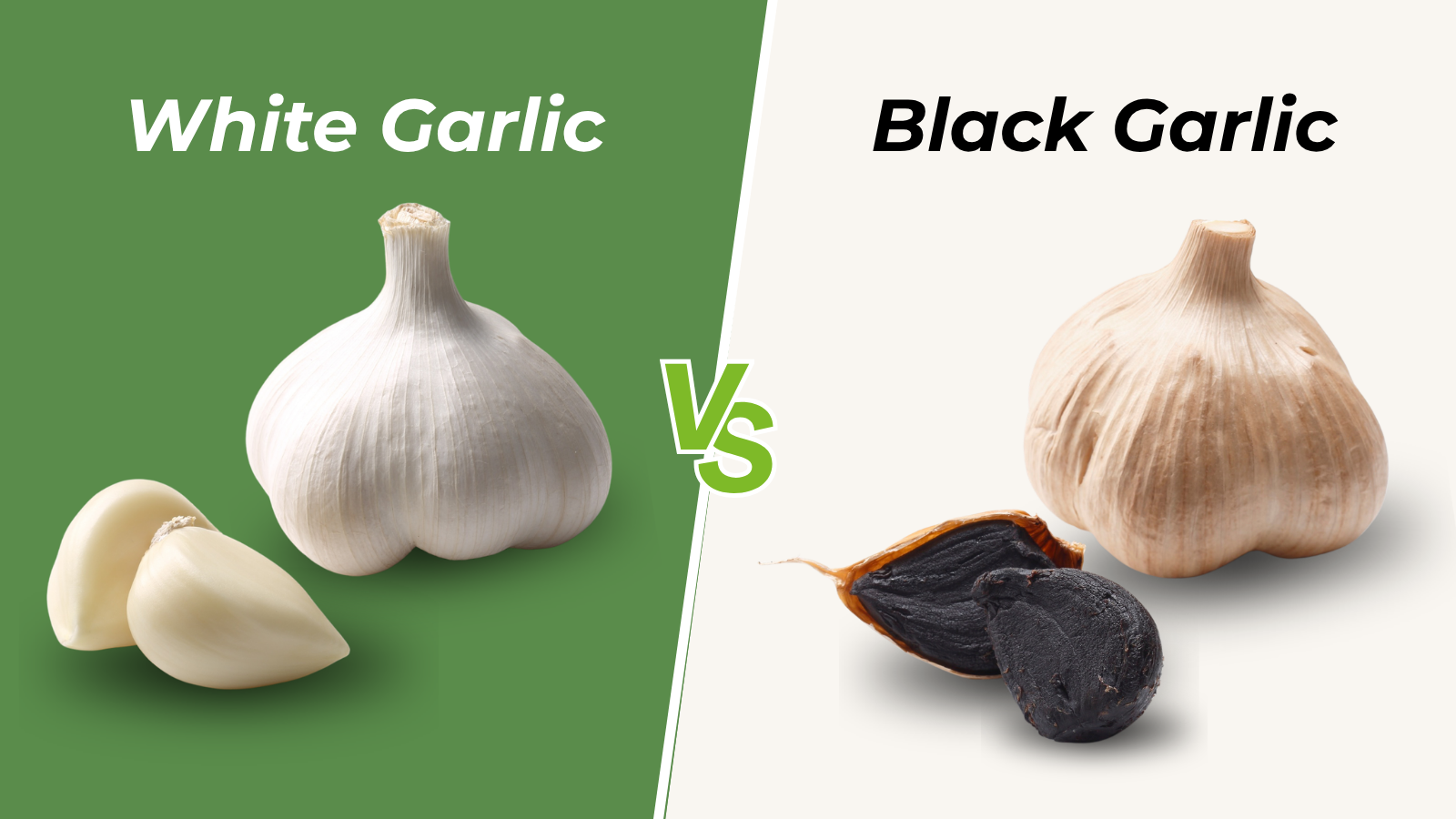
Black garlic is not a different plant. It is ordinary white garlic, that has been slowly aged for weeks with nothing but time, heat and humidity until the cloves turn jet black, soft and sweet. Same bulb, two completely different ingredients.
White garlic: the familiar classic
White garlic is the fresh bulb you find in every kitchen. Raw, it is sharp, slightly spicy and pungent; cooked, it mellows into the savoury backbone of countless dishes, from garlic mushrooms to a Sunday roast.
That bite comes from chemistry. When you crush or chop a clove, an enzyme called alliinase converts a compound called alliin into allicin which is the source of garlic's kick and much of its famous aroma. The finer you chop, the more allicin you make, and the stronger the flavour.
Black garlic: white garlic, transformed
Black garlic is made by ageing whole bulbs with a low, steady heat, in high humidity over a period of weeks. No additives, no smoke, no salt. Just time. Plus, we can’t divulge our secret method ;)
It is often called "fermented," but that is a bit misleading: no microbes do the work. The change comes mainly from the Maillard reaction, the same slow browning that gives seared steak and toasted bread their depth. Sugars and amino acids in the cloves react over weeks, turning them black and building rich, deep flavour.
The technique is closely associated with Korea and Japan, and over the past two decades it has moved from specialty shops into restaurant kitchens and supermarket shelves worldwide.
Flavour and texture: night and day
The two taste almost nothing alike. White garlic is assertive and spicy; black garlic is mellow, sweet and savoury, with none of the raw burn.
People describe black garlic as tasting like balsamic vinegar, molasses, tamarind or dried figs, with a deep umami finish. The texture shifts too: crisp, juicy cloves become soft and chewy, somewhere between a date and a gummy sweet.
It also does not linger on your breath the way fresh garlic does, a bonus if you’re on a first date ;)
Nutrition and health: different strengths
Both are good for you, but the ageing process shifts which compounds dominate.
White garlic is rich in allicin, the compound released when a fresh clove is crushed. It gives raw garlic its kick, but it is unstable and breaks down quickly once formed.
Black garlic is where the aging really pays off. As the cloves mature, levels of S-allyl cysteine (SAC) rise several times over. SAC is a water-soluble sulfur compound that the body absorbs easily, and it is far more stable than allicin. Black garlic also ends up with significantly higher antioxidant content than white garlic, and because it is so mellow, you can eat it straight from the clove, making it easy to enjoy every day.
A word of caution: enjoy black garlic as a flavourful, healthy food, not a supplement or a cure.
How to cook with each
Think of white garlic as a foundation and black garlic as a finishing touch.
Reach for white garlic when you want:
A sharp, punchy start to stir-fries, soups and stews, fried off with onions
Raw heat in allioli, pesto, salsa verde or salad dressings
Sweet, nutty depth from roasting whole heads
Reach for black garlic when you want:
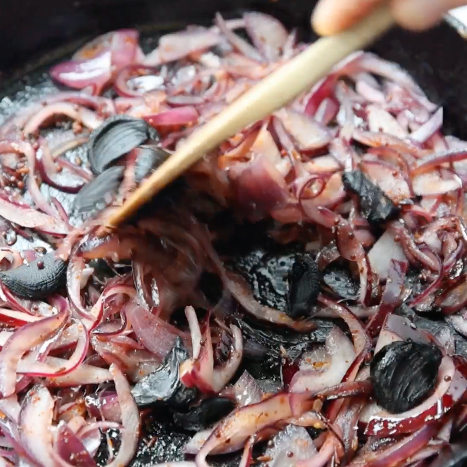
Instant depth: a few cloves give sauces, ragùs and Bolognese a slow-cooked richness without hours of simmering
Umami depth in curries, risotto, ramen broth or gravies
A sweet-savoury twist mashed into butter or rubs for meat or fish
Something unexpected on a cheese board, pizza or bruschetta
A secret ingredient in dressings, vinaigrettes, marinades — even an everyday sandwich!
At a glance
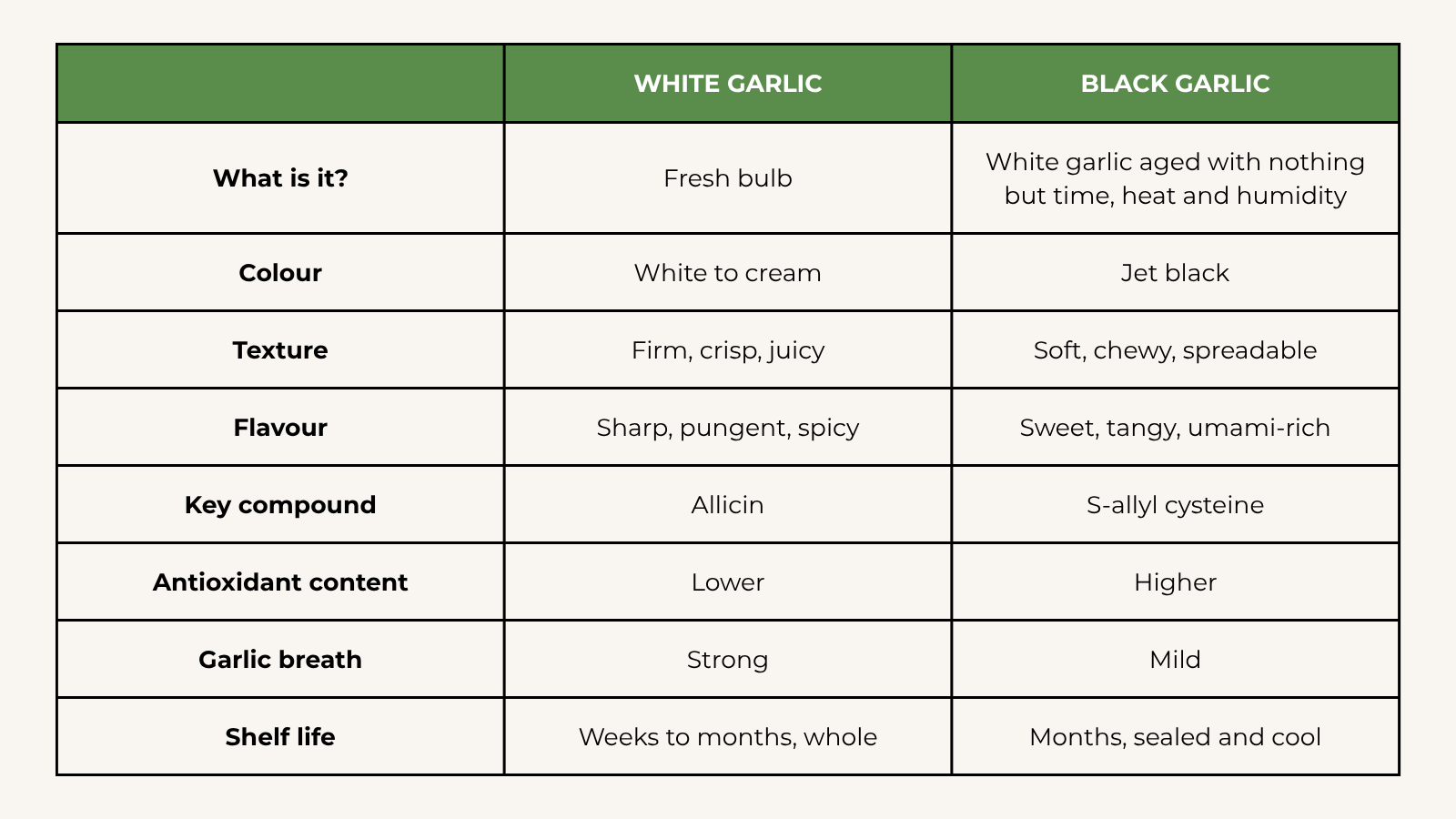
The verdict
Officially, there's no winner, they do different jobs. Unofficially, black garlic wins. Obviously, we produce it, so we may be slightly biased. And by slightly, we mean completely.
White garlic is the reliable old friend: cheap, punchy and always there for you. Black garlic is the friend who turns up with something nice, makes dinner taste like it came from a restaurant, and doesn't leave you with garlic breath for tomorrow's meeting.
So by all means keep a bulb of white garlic in the kitchen. Then open a pot of black garlic peeled cloves, spread a clove on warm toast with cheese, and try to remember why you ever cooked without it. Don't worry, white garlic will understand. Eventually.
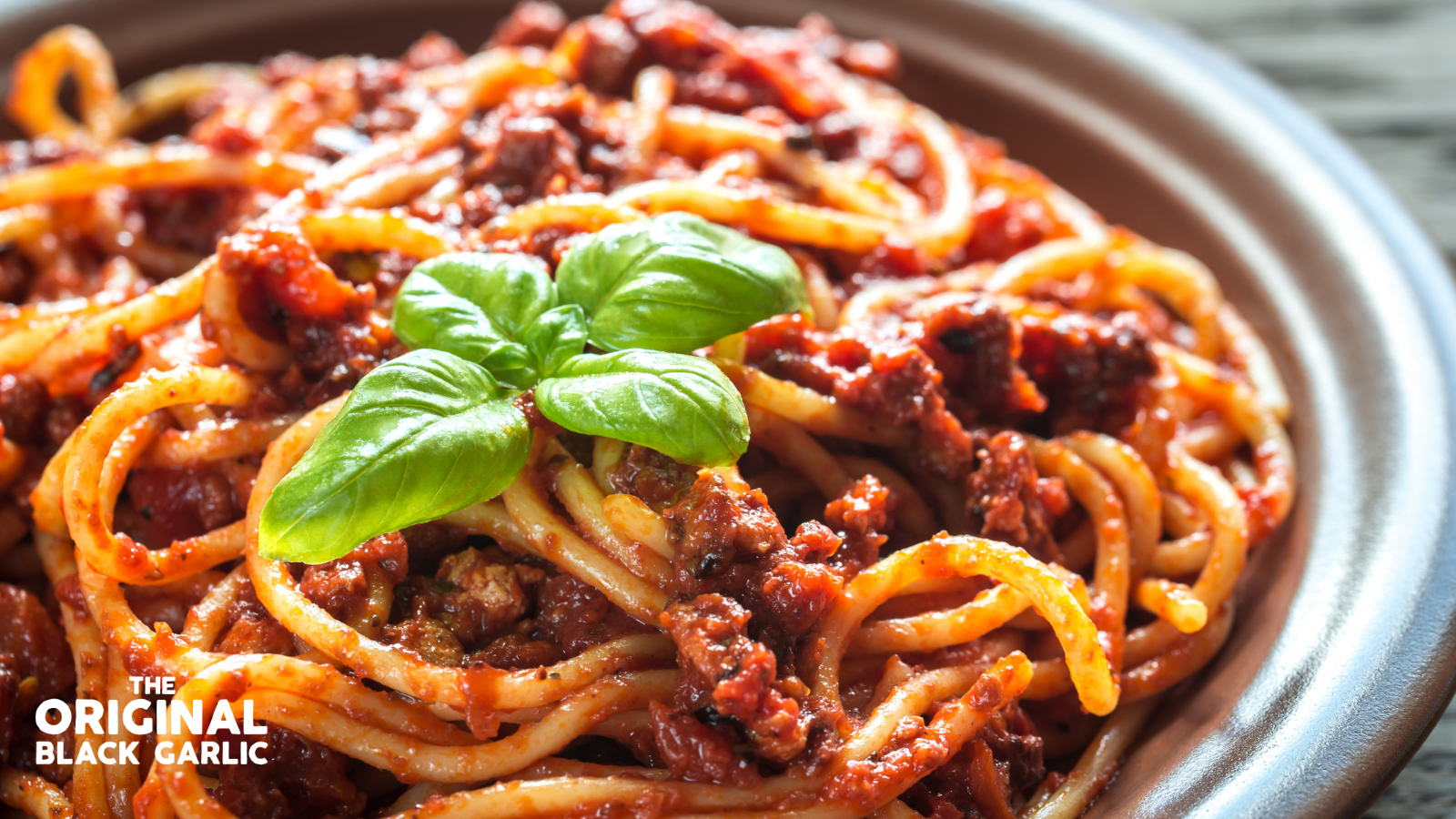
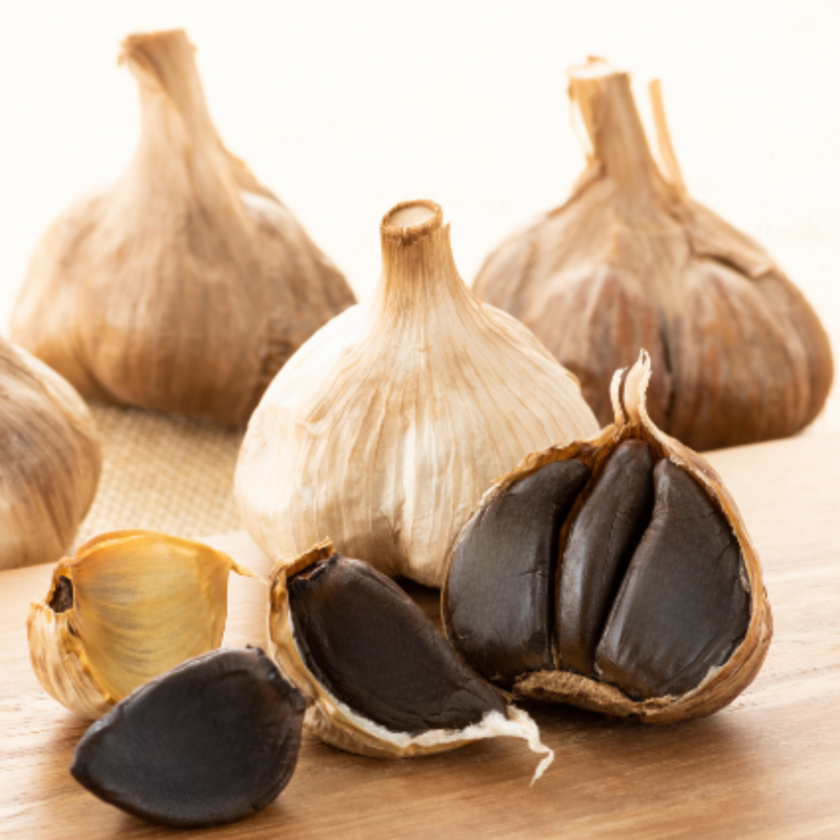
Ready to get cooking?
From ten-minute weeknight pastas to show-off Sunday dinners, black garlic earns its place in the kitchen fast. Our recipes are packed with easy ideas to help you make it a staple (no culinary degree required!)